Your Guide to Chicken Milanese Calories
Updated: Oct 31, 2025
Let's cut to the chase: a typical restaurant serving of Chicken Milanese lands at around 529 calories. That's a solid chunk of your daily budget, but it also packs a serious protein punch. So, how do you fit this crispy goodness into your life without derailing your goals? Let's break it down.
The Real Deal on Chicken Milanese Calories
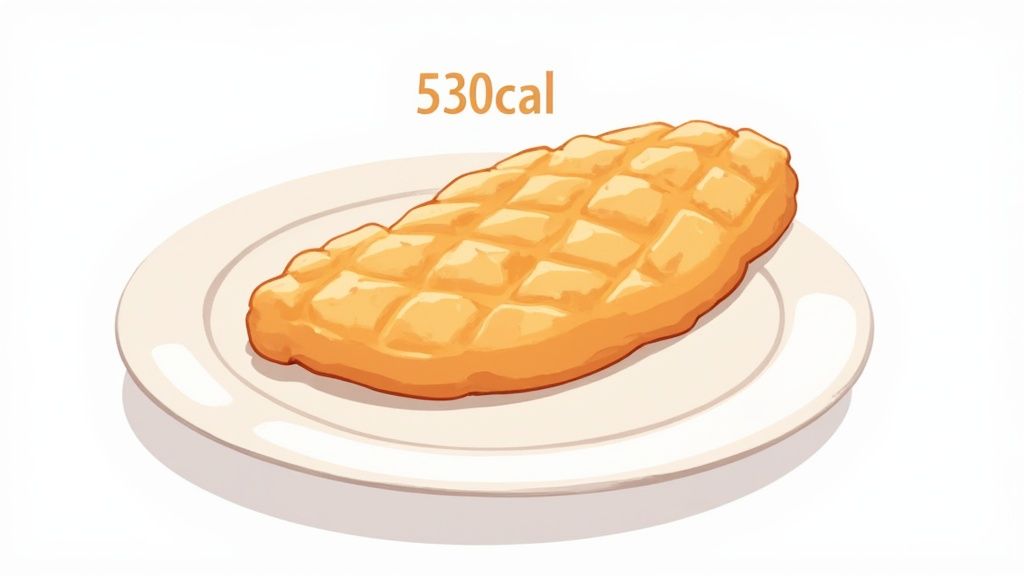
You love that crispy, golden-brown chicken, but you need the stats. When you're out with friends or just trying to plan your week, knowing the chicken milanese calories upfront helps you make a quick, smart decision. No more guessing games.
This classic Northern Italian dish is all about tender, breaded chicken cutlets pan-fried to perfection. Nutritionally, it’s pretty significant. One serving of around 235 grams contains about 529 calories, 41 grams of protein, and 24 grams of fat.
For a college student on a 2,000-calorie diet, that fat content alone makes up about 30% of your daily intake. You can find detailed breakdowns on sites like SnapCalorie.com, but the key is understanding the trade-off.
A single serving of Chicken Milanese can be like running for nearly an hour. Knowing what's inside helps you balance the rest of your day without missing out on a great meal.
To give you a clearer picture, here’s a quick breakdown of what you're typically looking at.
Typical Chicken Milanese Nutrition at a Glance
This table is your cheat sheet for the average nutritional values in a standard serving of Chicken Milanese, helping you see beyond just the calorie count.
Nutrient | Amount per Serving (~235g) |
|---|---|
Calories | 529.4 kcal |
Protein | 41.2 g |
Total Fat | 23.5 g |
Carbohydrates | 35.3 g |
As you can see, it's a balanced meal in its own right, delivering a hefty dose of protein alongside carbs and fats for energy.
Decoding What Drives Up the Calories
Ever wonder why the calorie count for chicken Milanese can swing so wildly from one restaurant to the next? It’s not magic. It's all in the details of how it’s made—think of it like customizing your Spotify playlist, where every choice changes the final vibe.
The three biggest players in the calorie game are the size of the chicken cutlet, the thickness of the breading, and, most importantly, the cooking method. A larger, thicker cutlet naturally starts with more calories, and a heavy coating of breadcrumbs acts like a sponge for whatever oil it's cooked in.
The Big Three Calorie Drivers
These are the main culprits behind a higher calorie count. Understanding them helps you spot a heavier version on a menu or just make smarter choices when you're cooking in your dorm.
Portion Size: A massive, plate-spilling cutlet is going to pack way more calories than a modest 120g portion. Simple as that.
Breading Thickness: A super thick, crunchy coating might be delicious, but it absorbs a ton more fat during cooking compared to a light dusting.
Cooking Method: This is the real game-changer. How the chicken is cooked can literally double its calorie count.
Just like using an app like BYTEY to filter restaurants by vibe or "healthy" options, knowing these drivers lets you filter your choices in real-time, whether you're ordering out or cooking in.
This chart shows just how dramatically the cooking method blows up the final calorie count for an average serving.
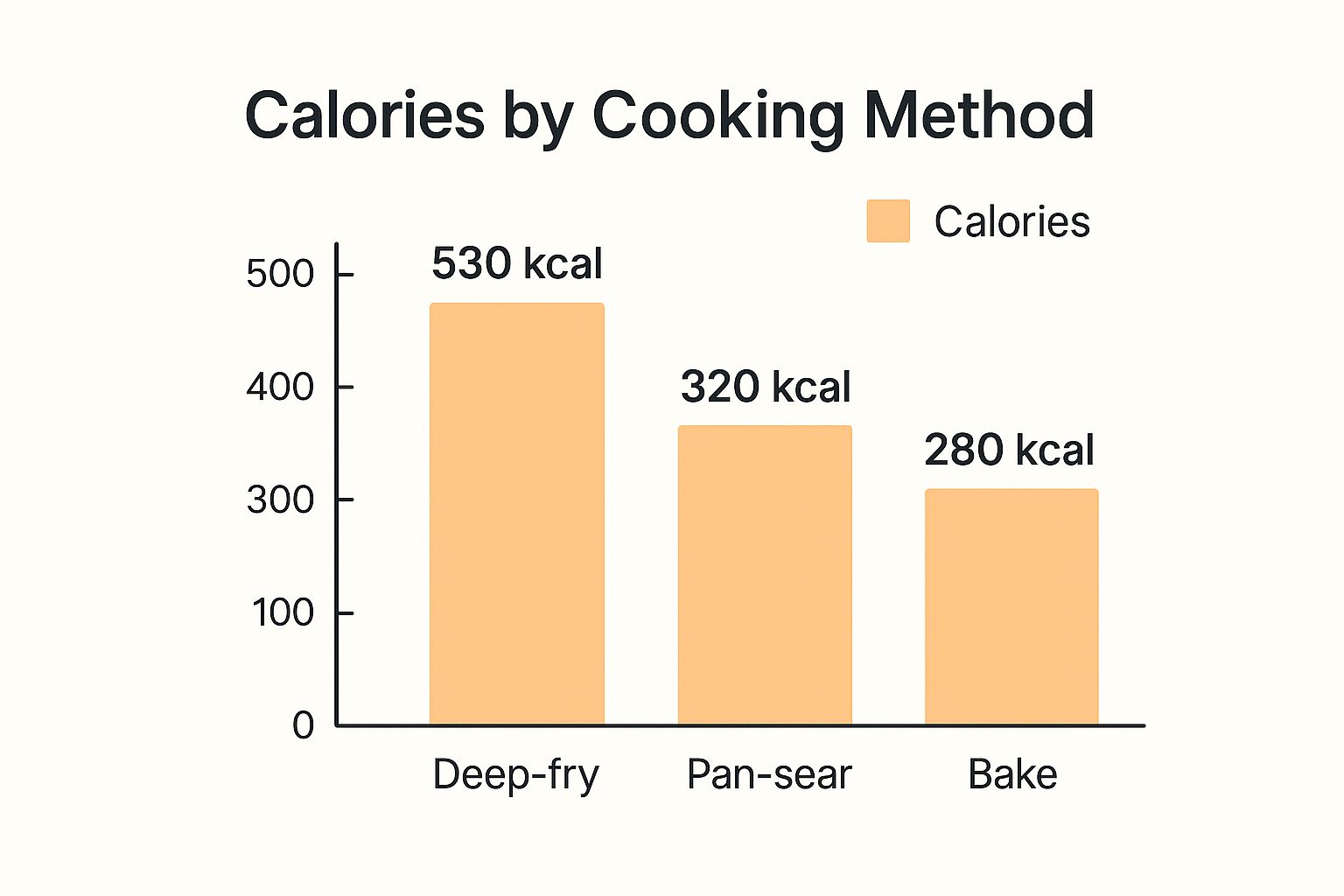
As you can see, deep-frying tacks on hundreds of extra calories. Baking, on the other hand, gives you a much lighter alternative without sacrificing too much of that satisfying crunch. This single choice is your most powerful tool for managing the chicken milanese calories in your meal.
How to Make a Healthier Chicken Milanese

Ready to hack your favorite dish? You don't have to give up that amazing golden crunch to cut down on the calories in chicken Milanese. With a few smart, simple swaps, you can create a lighter version that still hits all the right notes—perfect for a dorm kitchen or a quick weeknight meal.
The biggest win comes from ditching the heavy pan-frying. Trading a pool of oil for an air fryer or oven is a total game-changer. This simple move alone can save you over 150 calories per serving while still delivering that satisfying crispiness you crave. All it takes is a light spritz of cooking spray.
Smart Ingredient Upgrades
Beyond the cooking method, a few small ingredient changes can make a huge difference. These simple swaps add flavor and nutrients while trimming fat and empty carbs.
Breadcrumb Boost: Swap standard white breadcrumbs for whole-wheat panko. You’ll get more fiber to keep you full longer, and panko provides an even crispier texture.
Flavorful Marinade: Instead of just egg, try marinating your chicken in spiced Greek yogurt. It tenderizes the meat, adds a kick of flavor, and helps the breading stick with less fat.
Leaner Chicken: Always opt for skinless chicken breast. It’s a lean protein powerhouse that gives you a great foundation to build on.
Making small, intentional choices is key. It’s like using BYTEY’s "Taste Tags" to find exactly what you're craving—you're curating your meal to be both delicious and aligned with your goals.
These upgrades aren’t about restriction; they’re about making your meal work better for you. By combining a better cooking method with smarter ingredients, you can easily slash a significant number of calories without feeling like you're missing out.
Calorie-Saving Swaps for Your Milanese
Sometimes seeing the difference side-by-side makes it click. This table shows just how simple changes can drastically reduce the overall calorie and fat content of your homemade Milanese.
Component | Traditional Method (Higher Calorie) | Healthier Swap (Lower Calorie) |
|---|---|---|
Cooking Method | Pan-fried in oil | Baked or air-fried with cooking spray |
Breading | White breadcrumbs | Whole-wheat panko or crushed bran flakes |
Binder | Whole egg | Egg whites or spiced Greek yogurt |
Chicken Cut | Skin-on chicken thigh | Skinless, thinly pounded chicken breast |
It all adds up. Each of these swaps nudges your meal in a healthier direction without sacrificing the core elements that make Chicken Milanese so good in the first place.
Building a Smarter Plate Around Your Milanese
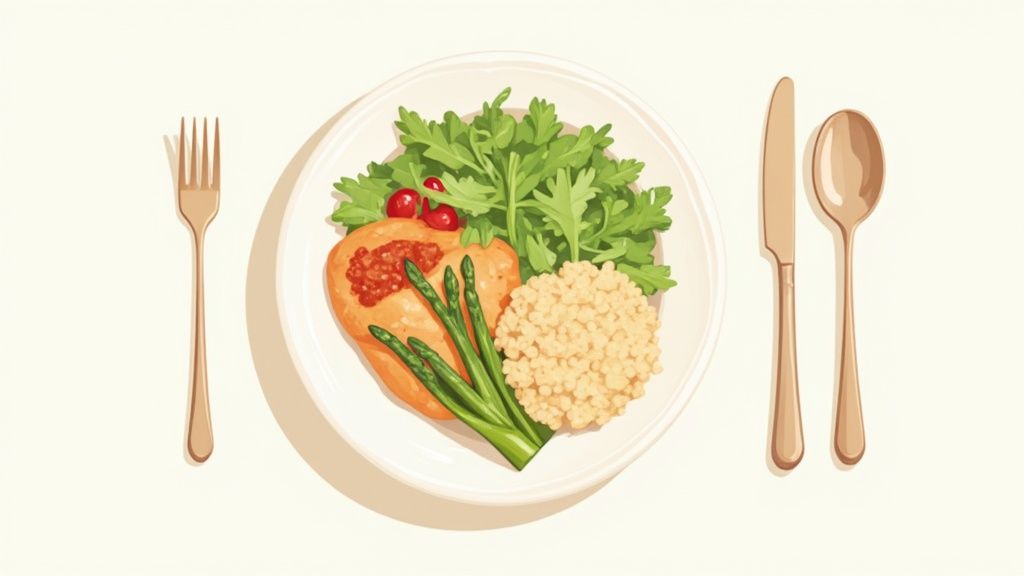
That crispy, golden chicken cutlet is the star of the show, but what you serve alongside it is what really tells the nutritional story. Think of it like this: a plate with Chicken Milanese and a mountain of fries is a completely different meal than one with a vibrant, fresh salad. Your sides are the supporting actors that can make or break the performance.
The goal is to build a supporting cast that adds nutrients, fiber, and flavor—not just a pile of empty calories. This is how you transform a delicious dish into a well-rounded meal that actually keeps you full and energized for that late-night study sesh.
Smart Sides Beyond the Basics
Let’s move past the classic lemon wedge and explore pairings that complement the chicken without derailing your health goals. A few simple swaps can make all the difference.
Zesty Arugula Salad: The peppery kick of arugula dressed in a simple lemon vinaigrette cuts right through the richness of the fried chicken. It adds vitamins and volume for almost no extra calories.
Garlic Roasted Asparagus: Roasting brings out a fantastic natural sweetness in asparagus. All it takes is a little garlic and olive oil for a side that’s packed with fiber.
Flavorful Quinoa Pilaf: Instead of a heavy pasta, try a light quinoa pilaf tossed with fresh herbs and veggies. You get a complete protein and complex carbs for energy that lasts.
Building a balanced plate is an actionable way to control the overall chicken milanese calories. It ensures you feel satisfied from a nutrient-dense meal, not just a heavy one.
For college students trying to find that sweet spot between taste and nutrition when ordering out, smart side choices are everything. You can apply these same principles when you're using a food ordering platform. Need more tips on that? Check out this college student's guide on how to order food with BYTEY for some extra hacks.
Ultimately, a smarter plate is all about balance. When you surround your crispy chicken with fresh, colorful, and nutrient-rich sides, you create a meal that’s both indulgent and intelligent.
Ordering Chicken Milanese Without the Guilt
Navigating a restaurant menu when you’re trying to eat smart can feel like a pop quiz you didn’t study for. But don't sweat it—ordering a lighter version of Chicken Milanese is totally doable once you know the hacks. Think of this as your playbook for enjoying a great meal out without blowing your health goals.
The first step is to become a menu detective. Look for descriptive words that give away how the dish is cooked. Terms like "crispy," "golden," or "fried" are usually red flags that signal a higher calorie count. Instead, look for dishes described as "pan-seared" or "baked," which almost always means less oil was involved.
Own Your Order
Don't be afraid to ask for a few simple changes to your meal. Most restaurants are happy to make small modifications, which puts you in the driver's seat. A few easy, no-stress requests can make a massive difference in the final chicken milanese calories.
Here are a few go-to moves:
Sauce on the Side: Those creamy sauces and rich dressings can pack in a shocking number of hidden calories. Getting them on the side lets you control exactly how much you use.
Swap the Sides: Politely ask to trade the standard fries or heavy pasta for a side salad or some steamed veggies. It’s an instant nutritional upgrade.
Ask About Prep: If the menu is a bit vague, just ask your server! A simple, "Is the chicken pan-fried or deep-fried?" gives you all the information you need to make a smart choice.
Having the confidence to customize your order is a superpower. It ensures you get a meal you'll actually enjoy without feeling guilty about it later.
Finding places that are cool with these kinds of tweaks is key. For more on this, check out our guide on how to find restaurants that don't disappoint, which has some great tips for discovering spots that match your vibe and dietary needs. These small hacks empower you to enjoy your favorite dishes, your way.
Your Chicken Milanese Questions Answered
Still have a few questions rattling around? Perfect. Let's clear them up so you can feel totally confident in your next order.
How Much Protein Is in Chicken Milanese
A typical restaurant serving of Chicken Milanese is a serious protein powerhouse, usually packing around 41 grams. This makes it a super satisfying meal that helps with muscle growth and will definitely keep you feeling full longer than a carb-heavy dish. Just be mindful of how that protein is prepared to keep the overall chicken milanese calories in check.
Can I Eat Chicken Milanese While Trying to Lose Weight
Absolutely, but you have to be smart about it. A massive, deep-fried portion from your favorite Italian spot probably isn't the best fit for your goals. But a home-baked or air-fried version paired with a giant salad or some roasted veggies? That definitely can be. Using those healthier swaps we talked about makes it easy to work this dish into a balanced, calorie-conscious diet.
The bottom line is that no food is inherently "good" or "bad." It's the preparation, portion size, and what you pair it with that truly matters.
Is Chicken Milanese Healthier Than Chicken Parmesan
On its own, Chicken Milanese is almost always the lighter option. It skips the heavy tomato sauce and blanket of melted cheese that can easily tack on an extra 150-300 calories to Chicken Parmesan. But remember, the cooking method is the great equalizer—a baked Chicken Parm will always be a better choice than a deep-fried Milanese.
Ready to turn your cravings into a game? With BYTEY, you can discover personalized meal recommendations, complete fun challenges, and unlock rewards just for ordering food. Stop scrolling endlessly and start finding the perfect bite. Check out BYTEY and make your next meal an adventure.