How Many Calories in a Greek Salad? The Real Deal for Students
Let's cut to the chase: a Greek salad can be your healthy go-to, clocking in at around 300 calories, or it can be a stealthy calorie-bomb, hitting over 600 calories. The difference? It’s all in the ingredients, portion size, and—the biggest player of all—the dressing.
The Real Calorie Count of a Greek Salad
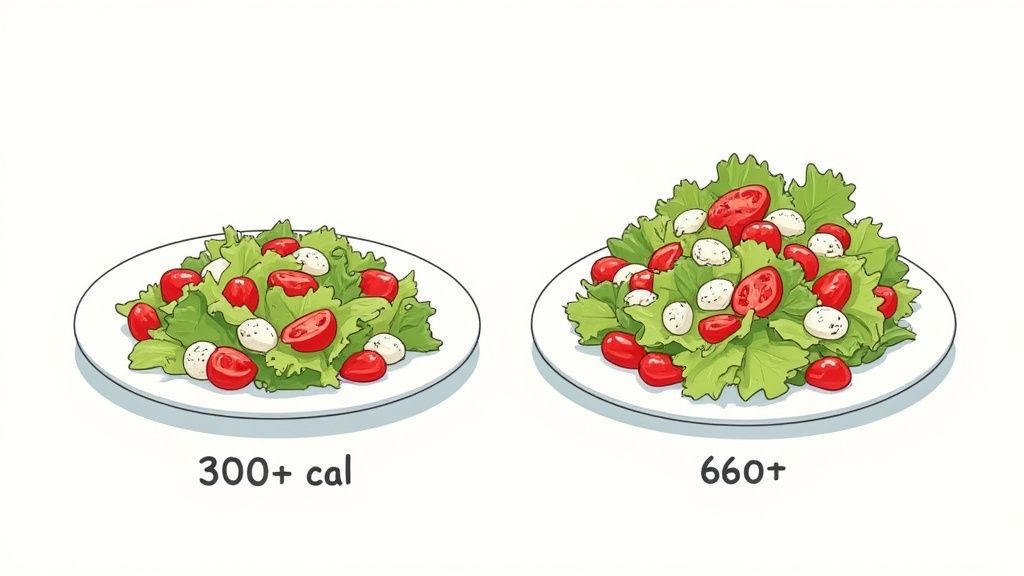
Trying to eat smart on a student budget or between classes is tough. You grab a Greek salad thinking you've made a solid choice, but the calorie count can be a total surprise. The good news is, you're in control, and a few simple hacks can make all the difference.
Understanding why the calories swing so wildly is the first step to owning your order. A small side salad is a world away from a massive, restaurant-sized main loaded with extra everything.
From Side Dish to Main Meal
Think of it like this: a basic salad with veggies and a light vinaigrette is your starting point. But every extra handful of feta, every glug of creamy dressing, and every single olive adds up. For instance, a pre-made Greek salad can range from 150 to over 400 calories. Looking at online data, one popular grab-and-go option has 170 calories and a decent 9 grams of protein.
This is where having the right tools makes a huge difference. When ordering out, it's not always easy to know what you're really getting. To stay on track, check out our guide on the best food ordering apps for college students in 2025 to find platforms that provide clear nutritional info.
Actionable Insight: Not all Greek salads are created equal. You control the final calorie count with your choices in dressing, cheese, and portion size. Own your order.
Let’s look at a quick comparison to see this in action.
Breaking Down Your Salad, Piece by Piece
Building a Greek salad is like leveling up a character in a game—every item you add changes the final stats. Instead of getting hit with one big, mysterious calorie number, let's break down the components. This way, you can build a better bowl every single time, whether you're at the campus dining hall or your favorite local spot.
The base of your salad—crisp lettuce, juicy tomatoes, and crunchy cucumbers—is your low-calorie foundation. These veggies deliver that fresh, satisfying crunch without really moving the needle on your calorie count, making your salad feel substantial from the start.
In fact, a typical Greek salad without any dressing is surprisingly light. Nutritional data shows that a basic 105-gram mix of just the veggies is only about 50 calories, with minimal fat. You can see the full stats in this nutritional breakdown on nutritionvalue.org.
The High-Impact Ingredients
Now for the fun stuff. The MVPs of flavor in a Greek salad also happen to be the most calorie-dense. Knowing who these all-stars are helps you stay in control of the final count.
Feta Cheese: Creamy, salty, and a must-have. A standard one-ounce serving (about the size of two dice) adds around 75 calories. Just know that most restaurants are very generous with their feta.
Kalamata Olives: These rich, briny flavor bombs pack a punch. Just five large olives can add 30-40 calories, mostly from heart-healthy fats.
Olive Oil (in the Dressing): Here's the big one. A single tablespoon of pure olive oil is about 120 calories. A simple vinaigrette is a fantastic choice, but the amount used can easily double the salad's total calorie count.
Why Salad Dressing Is a Calorie Game-Changer
If your healthy salad has a secret villain, it's almost always the dressing. This is where a smart meal choice can quickly become a calorie trap, especially when you're grabbing food on the go between classes. A simple, traditional vinaigrette is worlds away from the thick, creamy dressings often served at restaurants.
Those pre-made dressings can be loaded with surprising amounts of calories, unhealthy fats, and added sugars that totally sabotage your goals. A single two-tablespoon serving might not sound like much, but it can easily add 150 calories or more to your meal. It's a classic example of how hidden calories in a Greek salad add up, fast.
Vinaigrette vs. Creamy Dressing
To really see the difference, let’s compare a classic olive oil vinaigrette to a typical creamy dressing. This chart visualizes just how much the calories, fat, and sugar can vary in a standard two-tablespoon serving.
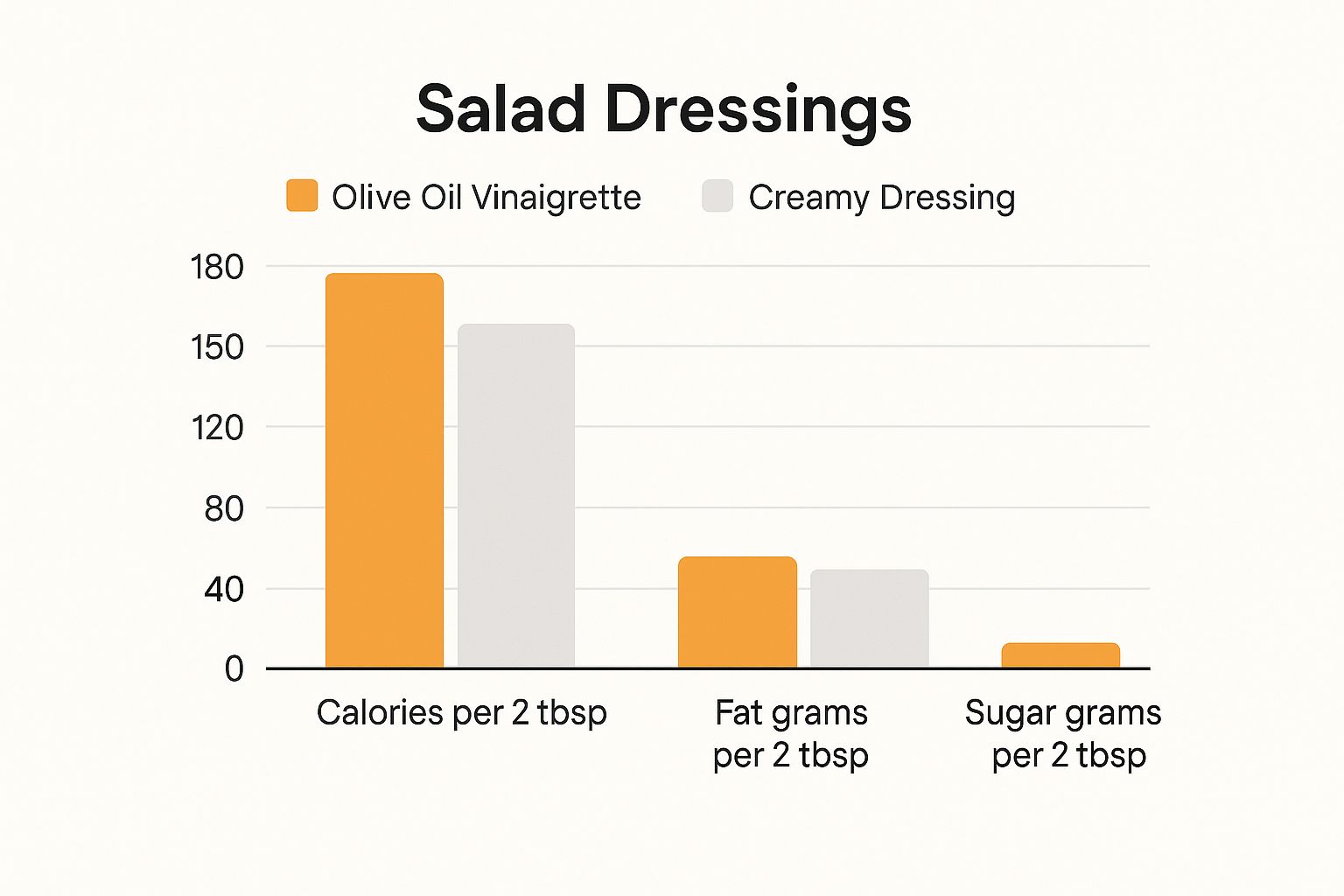
It’s clear: creamy dressings pack a much bigger punch in calories and fat, often with added sugar you don't even realize is there. Making a simple swap is one of the easiest ways to keep your salad light and healthy.
Dressing Showdown Calorie and Fat Comparison
To put this in perspective, let's break down a few common dressing types. This table gives you a head-to-head look at what you’re really adding to your salad with just a two-tablespoon serving.
Dressing Type | Estimated Calories | Estimated Fat (g) | Key Takeaway |
|---|---|---|---|
Olive Oil & Vinegar | 80-100 | 9-11 | The leanest choice, packed with healthy fats. |
Light Vinaigrette | 110-130 | 12-14 | A solid option, but check for added sugars. |
Creamy Ranch | 140-160 | 14-16 | A calorie-dense option loaded with saturated fat. |
Creamy Caesar | 160-180 | 17-19 | Often the heaviest hitter on the menu. |
As you can see, the jump from a simple vinaigrette to a creamy dressing is significant. Just a spoonful or two can make a huge difference in your meal's final calorie count.
Actionable Insight: Always ask for dressing on the side. This simple request lets you control exactly how much you use—dip your fork in it or drizzle a small amount yourself. You can cut dressing calories by more than half without sacrificing flavor.
This one habit gives you complete authority over a major calorie source. It's a small change that makes a huge difference.
Building a Better Salad With Smart Add-Ins
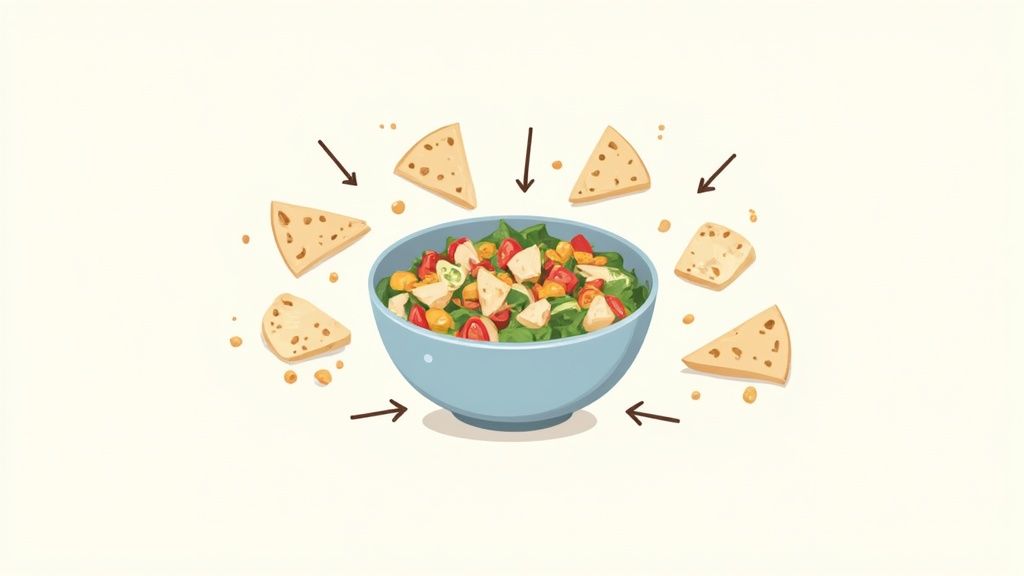
This is where you get to play chef. The extras you toss in can transform a simple Greek salad into a full-blown, satisfying meal. But be warned—they can also sneakily push it into high-calorie territory. The trick is to adopt a 'build-your-own' mindset, letting you create a salad that perfectly fits your goals, whether that's a light lunch or a serious post-workout refuel.
Think of your salad base as a blank canvas. Adding lean protein is one of the smartest moves you can make. It doesn't just add nutritional value; it seriously boosts satiety, helping you feel full and focused long after you've finished eating.
A common mistake is thinking all "healthy" additions are created equal. Prioritizing protein and fiber over extra fats or simple carbs is the secret to building a salad that works for you, not against you.
Smart Add-Ins for a Balanced Meal
The right ingredients can turn your salad into a nutritional powerhouse without a massive calorie spike. For example, a four-ounce serving of grilled chicken breast adds around 150 calories but comes with a huge 30 grams of protein.
Here are some popular choices and what they bring to the table:
Grilled Chicken (4 oz): Adds about 150 calories and a whopping 30g of protein. This is your go-to for turning a salad into a complete meal that supports muscle recovery.
Chickpeas (1/2 cup): Brings in around 135 calories, 7g of protein, and a solid 6g of fiber. It’s a fantastic plant-based option that adds real substance.
Pita Bread (1 small piece): This classic sidekick is usually around 80-100 calories. Just be mindful—it’s easy to eat more than one, and those carbs add up quickly.
Extra Feta (1 oz): Piles on another 75 calories. While it’s delicious, feta is calorie-dense, so it’s best used as a flavorful accent rather than a main component.
By choosing your add-ins wisely, you can easily control the final calorie count of your Greek salad, customizing it to match whatever your energy needs are for the day. This simple strategy puts you in the driver's seat.
How to Order a Healthier Salad When You Eat Out
Trying to eat healthy at a restaurant or campus dining hall can feel like a total guessing game, especially when you have no idea how many calories are hiding in that Greek salad. You're out with friends, and the last thing you want to do is sabotage your health goals.
The good news is, you can take charge with just a few simple phrases. Learning to confidently ask for small changes empowers you to customize your meal on the fly. Simple requests like, "Can I get the dressing on the side?" or "Could you go light on the feta?" make a massive difference. These quick tweaks put you back in the driver's seat without sacrificing the fun of eating out.
Master Your Order With These Simple Tricks
One of the sneakiest calorie traps in restaurants is portion distortion. The salad you're served is often two or even three times larger than a standard serving size, which sends the calorie count through the roof. Don't be shy about asking for a half-portion or just planning to box up half for later.
Here are some go-to phrases that work anywhere:
"Dressing on the side, please." This is the golden rule. It lets you add just enough for flavor, often slashing dressing calories by more than half.
"Could you go light on the feta and olives?" A polite and easy way to dial back two of the most calorie-dense ingredients.
"Can I add grilled chicken instead of extra cheese?" Swap out some of the fats for lean protein to make your meal more filling and balanced.
Mastering your order isn't about being difficult; it's about being intentional. These small adjustments ensure your meal aligns with your health goals, allowing you to enjoy social outings stress-free.
Of course, finding places that are happy to accommodate these requests is key. For more tips on that, check out our guide on how to find restaurants that don't disappoint.
Got Questions About Greek Salads? We've Got Answers
Alright, let's clear up a few things. You've got questions, and we've got the straight-up answers to help you navigate your Greek salad choices, whether you're staring down the options at the dining hall or ordering out.
Is a Greek Salad Good for Weight Loss?
Absolutely, as long as you play it smart with the high-calorie toppings. The real trick is to build it on a massive veggie base and stick with a light vinaigrette—always ask for it on the side!
Keep an eye on your portions of feta and olives, and think about adding a lean protein like grilled chicken. This simple move transforms it from a side dish into a balanced, filling meal that actually supports weight loss by keeping you full for hours, so you're not hunting for snacks an hour later.
How Much Feta Cheese Is Too Much?
A proper serving of feta is about one ounce. Picture a one-inch cube—that’s it, and it rings in at around 75 calories. The problem is, many restaurants will happily pile on two or even three times that amount, which can quickly tack on hundreds of extra calories without you even realizing it.
Actionable Insight: A pro move is to always ask for 'light feta' or just get it on the side. This simple habit puts you in the driver's seat, giving you total control over one of the salad's biggest calorie culprits.
What Are the Healthiest Additions to a Greek Salad?
Want to turn your Greek salad into a more complete meal without a huge calorie hit? Easy. Focus on protein and fiber. These are your best friends for staying energized through a long study session.
Protein Boosters: Grilled chicken or chickpeas are your go-to options here. They add serious staying power that keeps you full.
Nutrient-Dense Veggies: For extra vitamins and fiber with barely any calories, load up on more bell peppers, red onion, or even some artichoke hearts.
These additions bulk up your salad and make it way more satisfying without weighing you down.
Ready to find the perfect salad that fits your goals without all the guesswork? BYTEY uses smart AI and personalized Taste Tags to recommend meals that match your exact preferences, from calorie goals to flavor cravings. Our app analyzes online data to show you what people really think about a dish before you even order. Sign Up for BYTEY now and turn your next meal into a fun, rewarding experience. Find your perfect bite at https://www.byteyapp.com.