Corn Chips Carbs: The Ultimate Guide for College Snacking
You're deep into a late-night study grind, the bag of corn chips is open, and you have a sudden thought: "How many carbs are in these things?" Let's cut to the chase: a standard one-ounce serving (about a handful) has around 15-20 grams of carbs. They're a quick energy hit, but knowing the numbers is key to avoiding that dreaded post-snack crash.
Here's the breakdown of what that means for your study fuel and how to hack your snacking game.
The Real Deal on Corn Chips and Carbs
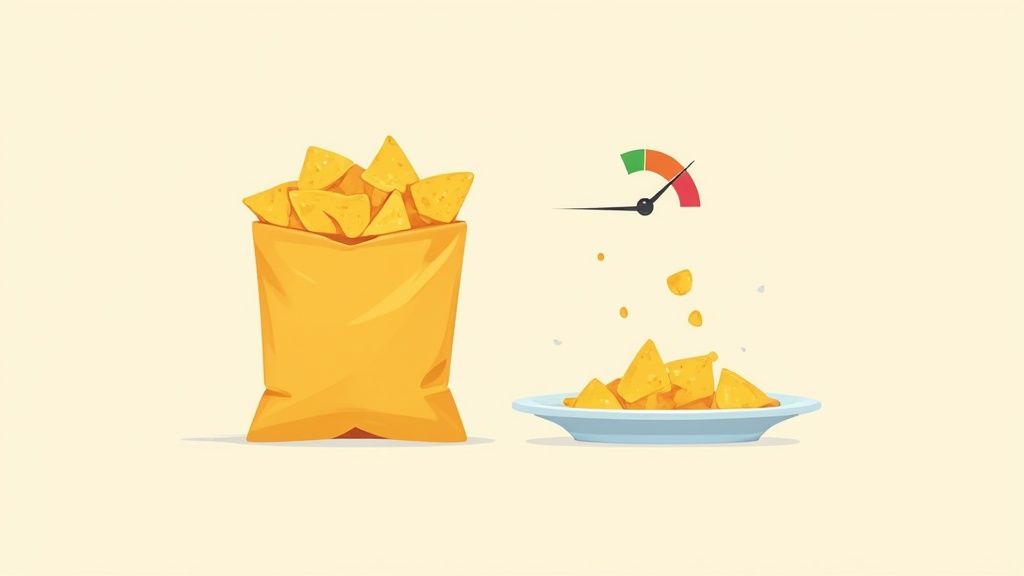
When you're pulling an all-nighter or just need a bite between classes, corn chips are clutch. They're crunchy, salty, and always there. But the carbs that give you that instant energy boost can also lead to a slump right when you need to focus.
Think of it this way: the carbs in corn chips are like a turbo boost for your brain. They give you an immediate lift, perfect for powering through a chapter. The catch? That fast fuel can burn out just as quickly, leaving you feeling drained. Understanding the carb count isn't about ditching chips; it's about making them work for you.
Why You Should Care About the Carb Count
If you're tracking macros or just trying to avoid feeling sluggish, the numbers matter. Corn chips are a campus staple, and the market for them is huge—reports like this corn chip market analysis show just how popular they are.
The goal is to make a smart choice, not a guilty one. When you know what you’re eating, you decide if that bag of chips is the right move for your energy needs right now.
This knowledge is your superpower for strategic snacking. Maybe you pair a small handful with a protein-packed dip like guacamole to slow down that energy release. Or you save them for when you genuinely need that quick jolt before an afternoon lab. It’s all about balance.
So whether you’re ordering a snack with an app like BYTEY or grabbing something from the campus vending machine, having the facts helps you stay in control of your energy and crush your goals.
Carb Check: How Your Faves Stack Up
Ever wonder how corn chips compare to other dorm-room essentials? It's easy to lose track when you're just grabbing whatever's available.
This quick cheat sheet shows how a one-ounce serving of corn chips compares to other go-to snacks. It’s a handy guide for making a quick, informed decision.
Snack (1 oz Serving) | Average Carb Count (grams) | The Vibe |
|---|---|---|
Corn Chips | 15-20g | Quick energy, perfect for dipping |
Pretzels | 22-24g | Higher-carb, classic crunch |
Potato Chips | 15-16g | Similar carb load, different flavor |
Popcorn (Air-Popped) | 17-19g | High-volume, feels like more |
Almonds | 6g | Low-carb, high-protein power-up |
String Cheese | ~1g | Zero-effort protein boost, almost no carbs |
As you can see, corn chips are mid-tier. They aren’t the highest-carb option, but they're definitely not a low-carb pick like almonds or cheese. It all comes down to what your body needs at that moment.
Why Corn Is a Carb Powerhouse

Ever wonder why corn chips are so loaded with carbs? It's simple: they're made of corn. Corn is a starchy vegetable, which is basically nature’s way of packing a ton of quick, easy energy into a tiny kernel.
Think of each kernel as a mini energy cell. When that corn is ground into masa (the dough for chips), all those energy cells get concentrated. That’s how a humble vegetable becomes the base for one of the most satisfying snacks on the planet.
This journey from kernel to chip is the key to understanding the corn chips carbs count. The process makes the carbs super accessible for your body to burn as fuel, which is why you get that instant energy spike after just a few handfuls.
From Cornfield to Chip Bag
The specific type of corn and how it’s processed changes the final nutritional profile. Most tortilla chips, for example, use corn that has gone through nixtamalization. This is a traditional method of soaking the corn in an alkaline solution (like limewater), which makes it easier to grind and unlocks nutrients like niacin.
But the main reason for the high carb count stays the same: cornmeal is the #1 ingredient. This simple fact defines the entire nutritional vibe of the snack.
This means that even if some chips are made with whole grains, the carb content will always be a major feature. The carbohydrate content of corn chips almost always lands between 15-20 grams per ounce—a direct result of their corn DNA.
Finally, don't sleep on the flavor dust. A plain, salted corn chip is different from one coated in nacho cheese or cool ranch seasoning. Those coatings often add small amounts of extra sugars and starches, which can bump up the total carb count. It all adds up to the snack you know and love.
How to Enjoy Corn Chips Without Sabotaging Your Goals
Let's be real—sometimes you just need that salty crunch. The good news? You don’t have to ghost corn chips just because you’re trying to eat better. It’s not about restriction; it’s about being strategic.
Here’s your playbook for keeping chips in your life without wrecking your health goals.
Forget the food scale. The easiest way to stay in control is with a simple life hack: pour a serving into a bowl. Don't bring the whole bag to your desk. A standard serving is about one ounce, which is a solid handful or around 10-15 chips.
This one move is a game-changer. It stops the mindless munching that happens during a Netflix binge or cram session, preventing your snack from accidentally becoming a fourth meal.
Level Up Your Snack with Smart Pairings
This is where you can really hack your snack. Eating a pile of chips by themselves is a one-way ticket to a blood sugar spike that will leave you hungry again in an hour. The fix? Pair those carbs with protein and healthy fats.
This combo slows down digestion, keeps your energy stable, and makes you feel full way longer. You’re essentially building a balanced mini-meal.
A few powerhouse pairings to try:
Guacamole: Avocado is loaded with healthy fats and fiber, perfect for slowing down carb absorption.
Greek Yogurt Dip: Ditch the sour cream. Mix plain Greek yogurt with herbs and lime for a serious protein boost.
Bean Dip: Beans are packed with protein and fiber, making them another A+ choice for a filling, balanced snack.
Create a Snack Budget
Just like you budget your money, you can budget your snacks. Plan when you’ll enjoy treats like corn chips. Maybe it's for Friday movie night. Knowing it's planned makes it easier to grab a healthier option on a Tuesday afternoon. This kills the guilt and puts you in control.
A "snack budget" isn't about restriction; it's about making intentional choices that fit your life. It’s a sustainable way to enjoy the foods you love while still crushing your health goals.
This strategy is clutch for navigating campus life. For more hacks on making smart food choices, check out our guide to the best food ordering apps for college students. Planning ahead is the ultimate cheat code.
Decoding the Nutrition Label Like a Pro
That nutrition label on the back of the bag? It’s your secret weapon. Let's break down a real corn chip label so you know exactly what to look for and how to use that info to your advantage.
A typical one-ounce serving of corn chips has around 150-170 calories and 15-20 grams of carbohydrates. Knowing this helps you understand the immediate energy impact. For a bigger picture, you can discover key insights about the corn chip market and see how brands compare.
But the total carb count isn't the whole story. To get the real scoop, you need to find one more number: dietary fiber.
The Hack for Net Carbs and Serving Size Traps
For anyone watching their intake, calculating net carbs is a total game-changer. It’s a simple formula:
Total Carbs - Dietary Fiber = Net Carbs
This number gives you a better idea of the carbs your body will actually use for energy. For instance, if a serving has 19g of total carbs but only 1.5g of fiber, you’re looking at 17.5g of net carbs.
Pro Tip: Watch out for the serving size trap. Brands often list tiny serving sizes—like just 10 chips—to make the numbers look better. A quick check helps you stay realistic about how much you're actually eating.
This simple flow breaks down smart snacking into three easy, actionable steps.

The key takeaway is that mindful snacking isn’t about restriction. It’s about being strategic with your portions, pairing your snacks wisely, and planning ahead to fit your lifestyle.
Smarter Swaps for When You Crave That Crunch
So, you've hit your carb limit, but that craving for something salty and crunchy is real. We’ve all been there. The good news? There are tons of awesome, lower-carb alternatives that deliver that satisfying crunch without messing up your goals.
Think of it like swapping a sugary soda for sparkling water—you still get the fizz, just without the stuff you’re avoiding. These swaps are your secret weapon for keeping the corn chips carbs count low while still enjoying a great snack.
Level Up Your Snack Game
Instead of grabbing that familiar bag of chips, give one of these dorm-friendly alternatives a try. They require minimal prep but deliver maximum crunch.
Baked Veggie Chips: Thinly sliced zucchini or kale, tossed with olive oil and salt, and baked until crispy. Seriously, a game-changer.
Crispy Cheese Crisps: Yep, just cheese. Small piles of shredded cheddar on a baking sheet, crisped up in a toaster oven, create a savory, crunchy, and almost zero-carb snack.
Roasted Chickpeas: Rinse and dry a can of chickpeas, toss them with your favorite spices (try paprika and garlic powder), and roast until golden. They become a protein-packed, crunchy powerhouse.
The goal isn't to perfectly replicate a corn chip. It's about finding a new snack that satisfies the same need for something crunchy and salty. You might just discover your next obsession.
Super Simple Dorm Room Recipe
No kitchen? No problem. For quick cheese crisps, place small mounds of shredded cheese on a microwave-safe plate with parchment paper. Nuke in 30-second bursts until bubbly and golden. Let them cool for a minute, and they'll crisp up perfectly.
Low-Carb Alternatives to Corn Chips
Ready to find your next go-to snack? Here are a few more healthier, lower-carb options to get you started.
Snack Idea | Carbs Per Serving | Why It Works |
|---|---|---|
Pork Rinds | ~0g | The ultimate zero-carb crunch. Perfect for dipping in guac or salsa. |
Cucumber Slices | ~2g per half cup | Cool, crisp, and refreshing. A fantastic low-carb vehicle for dips. |
Bell Pepper Strips | ~4g per half cup | Sweet, crunchy, and packed with vitamins. A colorful and satisfying alternative. |
Almonds or Pecans | ~3-4g net carbs | A handful offers healthy fats, protein, and that essential salty crunch. |
These ideas prove you don't have to give up satisfying snacks—just swap them for something that works better for your goals.
For more tips on managing your meals on campus, check out a college student's guide on how to order food with BYTEY. It’s all about having the right strategies to make smart eating feel effortless.
Your Questions About Corn Chips, Answered
Still have questions? You’re not the only one. When it comes to snacking, especially when you're busy, getting straight answers is the best way to stay on track.
Let's clear up the most common questions about corn chips carbs and how they can fit into your routine.
The goal isn't to demonize one food, but to understand its role. Knowing the glycemic index of corn chips, for instance, helps you predict how they'll affect your energy during a long study session.
Here are the fast facts you need.
Corn Chips FAQ
Quick answers to your most pressing questions.
Question | Answer |
|---|---|
Are blue corn chips a better option? | They often have slightly more protein and a lower glycemic index, but the carb count is usually very similar. Portion control is still key. |
What's the best dip to pair with chips? | Go for something with protein and healthy fats to slow down carb digestion. Guacamole is an A+ choice. A Greek yogurt or black bean dip also adds a great protein punch. |
Do baked corn chips have fewer carbs? | Not really. "Baked" usually means lower in fat, not carbs. The carb count is often almost identical to fried versions, so always check the label. |
Hopefully, that clears things up! Knowing these details makes it way easier to snack smarter without overthinking it.
Ready to make smarter, faster food choices? With BYTEY, you get personalized recommendations that match your taste and health goals. Stop guessing and start enjoying the perfect bite every time. Check out BYTEY and join the early access list today!