How to Write Restaurant Reviews That Don't Suck
Let's be real: you’ve had a meal so good (or so bad) you needed to text your group chat immediately. That’s the energy we’re channeling into a great restaurant review. It's not about being a stuffy food critic; it’s about sharing the real story—the food, the vibes, the service—so your friends (and the internet) know whether a place is worth their time and money. Specifics are your superpower.
The Art of the Modern Restaurant Review
Forget what you think a review "should" sound like. Today, it’s all about authentic, honest takes from real people. Your perspective is exactly what someone else is scrolling for, trying to decide if they should hit up a new spot.
This is your ultimate guide to becoming the go-to source for food recs. We'll break down how to write reviews that give the full picture, from the moment you walk in to that final, satisfying (or disappointing) bite.
Why Your Review Actually Matters
With a million restaurants on the map, your opinion has serious pull. People trust peer feedback now more than ever. In fact, a recent report found that 41% of diners checked Google reviews in the last three months alone. Your honest take can make or break a restaurant's week, especially for a local spot. Dig into more stats in the 2025 State of the Restaurant Industry report.
This is especially true when you're a student or just starting your career, trying to figure out the best spots for:
Quick campus lunches: Where can you get a solid, affordable bite between classes without being late?
Weekend study spots: Which coffee shop has the best vibes, reliable Wi-Fi, and a cold brew that actually slaps?
Date nights: How do you find a place that’s impressive but won’t drain your bank account?
Group dinners: The eternal struggle of finding a spot that everyone in the crew can agree on.
"Your review isn't just a comment disappearing into the void. It’s actionable advice that helps someone else make a better choice. You're building a community of food lovers helping each other find the good stuff."
Tapping into Your Inner Foodie
Let's get one thing straight: you don't need a culinary degree to have a valid opinion. Your unique point of view is what makes your review so valuable.
Think about the little details that stood out. Did the server give you an amazing off-menu recommendation? Was the "house playlist" just a chaotic mix of sad indie and loud EDM? Was the "spicy" dish actually spicy, or was it a total letdown? These are the specifics that bring your experience to life for a reader.
Before you start typing, run through a mental checklist of what makes a review genuinely useful. This table breaks down the essential components.
Key Elements of a Standout Review
Component | What to Focus On | Why It Matters |
|---|---|---|
The Food | Describe the flavors, texture, presentation, and portion size. Be specific! | "Delicious" is basic. "Crispy, salty skin on the perfectly cooked salmon with a lemon-dill sauce that cut the richness" is way more helpful. |
The Ambiance | Talk about the decor, lighting, music, noise level, and overall vibe. | Sets the scene. Is it a cozy date spot, a loud pre-game joint, or a trendy place to be seen? |
The Service | Was the staff friendly, attentive, and knowledgeable? Mention wait times. | Great service can save a meh meal, and bad service can ruin an amazing one. This is a critical piece of the puzzle. |
The Price | Note the overall cost and whether it felt like a good value for the experience. | Helps readers figure out if the restaurant fits their budget. Mentioning price ranges or specific dish costs is a huge plus. |
Covering these four bases ensures your review gives the full story.
That’s where platforms like BYTEY come in. They’re designed to connect you with a community of food lovers. You can use features like personalized "Taste Tags" to find dishes that match your exact cravings—think "Spicy," "Comfort Food," or "Vegan-Friendly." It helps you share your food discoveries with others, turning your dining adventures into a legit guide for everyone in your city. The whole point is to make reviews that are as fun to read as they are to write.
Describing Food Beyond Just 'Delicious'
This is where your review goes from okay to legendary. Anyone can say a burger was "good." But that doesn't help your friend decide if it's worth their last ten bucks before payday. The real art is painting a picture with your words.
You want to make your reader's mouth water. It’s all in the details. Instead of "the pizza was delicious," try something like, "the pizza had a perfect leopard-spotted crust, with a tangy tomato sauce that cut right through the creamy, melted mozzarella." See the difference? Specifics are your secret weapon.
Decoding the Flavors and Textures
Before you even take a bite, look at the plate. Is it a vibrant, Insta-worthy masterpiece or kind of a beige snooze-fest? Presentation is part of the experience, so call it out. Maybe the tacos were artfully arranged, or the ramen bowl was a perfectly constructed little world of its own.
Once you dig in, use all your senses. Your description toolkit should include words that cover:
Flavor Profiles: Was the dish smoky, sweet, umami-rich, zesty, or herbaceous? Did the flavors work together, or was one totally overpowering?
Texture: Taste is only half the story. Was the chicken crispy on the outside but juicy inside? Was the pasta perfectly al dente? Maybe the dessert was impossibly creamy, fluffy, or had a satisfying crunch.
Execution: Did it feel like a clever, modern take on a classic dish, or was it just a perfectly executed traditional recipe? Let your reader know the deal.
Let’s practice on something simple, like the avocado toast at a campus cafe. "The toast was great" is boring. But what about this? "The sourdough was perfectly toasted—crunchy on the outside but still soft inside—and piled high with creamy avocado and a sprinkle of spicy red pepper flakes that gave it a nice kick." Now that tells a complete story.
"Actionable Tip: On your phone's notes app, jot down 3-5 specific words to describe each dish as you're eating it. It makes writing the review later a million times easier."
Don't Forget the Drinks
The drink menu is often the unsung hero of a great meal. A unique mocktail, a game-changing espresso, or a creative cold brew can be just as memorable as the main course.
This is more relevant than ever. The non-alcoholic beverage market is blowing up—sales have skyrocketed by 350% year-over-year—and restaurants are getting seriously creative. Pointing out an amazing hibiscus iced tea or a spicy ginger mocktail shows you're paying attention and gives a much fuller picture. Dig into this trend and other fascinating restaurant industry statistics on GloriaFood.
So next time, give the drinks a shout-out. It adds another helpful layer of detail. You're not just reviewing the food; you're reviewing the entire experience.
Capturing the Vibe and Service Experience
A restaurant is never just about the food. The entire experience is what sticks with you. It’s the energy in the room, the music, the way the staff treats you. This is the stuff that helps your readers decide if a place is right for their specific plans.
Think about the atmosphere. Was it a buzzing, high-energy bistro with an indie rock playlist perfect for a Friday night pre-game? Or a quiet, cozy cafe with soft lighting and chill beats, making it the ideal hideout for a long study session? Painting this picture is crucial.
It's More Than Just a "Hello"
Service can make or break a meal. It’s not just about getting the order right; it’s about how the staff made you feel. Were you welcomed and looked after, or did you feel like you were just another table to turn?
When you talk about service, get specific. Instead of "it was bad," tell the story. For instance, "Our server seemed swamped and we had a long wait for the check, but they were super friendly and apologetic when they finally got to us." That gives a much clearer, more balanced picture.
Think about the little moments:
The Greeting: Were you greeted with a smile when you walked in? A warm welcome sets the tone.
Staff Vibe: Were they genuinely friendly? Did they know the menu well? Did they find that perfect balance between being attentive and giving you space?
Timing is Everything: Did you feel rushed, or were there awkwardly long gaps that left you staring at your empty plate?
"Actionable Tip: If the service was memorable (good or bad), mention the server by name if you can. It adds a human touch and gives the restaurant specific feedback."
Don't Forget the Modern Tech Touch
These days, the experience often starts online. How was their reservation system? Was it a breeze to use, or a clunky mess? Was the waitlist accurate? These tech details matter.
Restaurants are investing more in tech to make things smoother. In fact, a whopping 73% of restaurant operators have ramped up their tech investments over the past year. This includes things like QR code menus, paying from your phone, and seamless online ordering.
Mentioning whether these features worked well adds a super practical layer to your review. If the online ordering was glitchy or the pay-at-table feature saved you a ton of time, people want to know. If you're curious, check out more restaurant industry statistics.
When you weave together these details—the atmosphere, the service, and the tech—you give your readers the full scoop and help them find their perfect spot.
Talking About Price and Value
Let's talk about the most crucial part for many people: the price. For your readers—especially college students or anyone on a budget—this is a must-know.
The trick is to discuss cost in a way that’s genuinely helpful. It’s all about framing the conversation around value, not just the final number on the check. Instead of just slapping a label like "expensive" or "cheap" on a place, dig a bit deeper. Your readers need to know why it felt that way.
Breaking Down the Real Value
Think of yourself as a value detective. Was that $18 burger worth it? Maybe it was made with top-tier, locally sourced beef and came with a massive pile of perfectly crispy fries. If so, that price tag reflects quality and portion size. That's fantastic value.
On the flip side, a $12 sandwich that’s small and uses basic ingredients might feel like a rip-off. It’s all about context.
To help your readers, touch on these points:
Portion Sizes: Were they generous? Or did you leave thinking about hitting up a taco truck on the way home?
Ingredient Quality: Could you taste the difference? Mentioning details like "hand-cut fries," "artisan bread," or "locally grown greens" adds credibility.
The Overall Experience: Sometimes the vibe is worth paying for. Did amazing service or a killer atmosphere make the price feel justified?
"Actionable Tip: Instead of just saying "expensive," give context like, "Entrees are around $25, so it's more of a special occasion spot than a weekly hangout." This is instantly more useful."
Giving Readers Budget-Friendly Context
One of the most practical things you can do is to compare a restaurant’s prices to similar spots nearby. This gives readers a clear benchmark.
For instance, "The lattes here run a dollar more than the cafe down the street, but the chill vibe and reliable Wi-Fi have made it my new go-to study spot." See? It helps people make smart decisions based on what they value.
It's also worth remembering the reality for restaurant owners. The average annual revenue for a U.S. restaurant can be as low as $129,637, which puts things into perspective. You can learn more about restaurant sales and financial dynamics online.
Ultimately, a thoughtful discussion of price and value is what makes a good review great. You’re helping people spend their hard-earned cash wisely.
Okay, you've gathered all the intel—the good, the bad, and the ugly. Now, how do you shape that into a review people will actually read?
The goal is to create something that's easy to read, grabs attention, and delivers the essential info without the fluff.
Think of your review like a good TikTok: it needs a compelling hook, an informative middle, and a clear call to action. A jumbled mess of thoughts will just get scrolled past.
A Simple Blueprint for an Effective Review
The best reviews are scannable. This isn't about following a rigid formula, but creating a logical flow that’s easy to digest.
It starts with a headline that grabs attention. Instead of "Good Italian Place," try "Perfectly Chewy Neapolitan Pizza & a Killer Date Night Vibe." One is forgettable; the other paints a picture.
From there, follow a simple framework that just works.
The Punchline First (TL;DR): Start with a one-sentence summary. Give readers the bottom line right away.
The Nitty-Gritty: Dive into the details with short, separate paragraphs. Break it down into food, vibe, and service. This makes your review super easy to scan.
The Final Takeaway: End with a clear conclusion. State whether you'd go back and who you'd recommend it to. Is it great for a cheap lunch, a fancy celebration, or a casual weeknight dinner?
"A review's structure is its skeleton. A solid framework ensures your awesome insights don't get lost in a wall of text."
For a clearer picture, here’s a simple template you can follow.
Simple Review Structure Template
This straightforward template helps you organize your thoughts for maximum impact.
Section | Content Goal | Example Snippet |
|---|---|---|
Headline | Grab attention and set the scene. | "Authentic Tacos & The Best Margarita in Town" |
Opening Summary | Deliver your overall verdict in one or two sentences. | "If you're looking for incredible al pastor tacos in a fun, lively spot, this is it. We'll definitely be back." |
The Food | Describe what you ate, focusing on taste, texture, and presentation. | "The al pastor was perfectly crispy and flavorful, sliced right off the trompo. The house-made tortillas made all the difference." |
The Vibe | Detail the atmosphere and decor. | "The place has a cool, modern taqueria vibe with upbeat music. It gets loud, so it’s better for a fun night out than a quiet chat." |
The Service | Comment on the staff's attentiveness and friendliness. | "Service was fast and friendly. Our server gave us some great recommendations and checked on us without being intrusive." |
Final Verdict | Summarize and give a specific recommendation. | "Overall, a fantastic spot for a casual, high-energy dinner with friends. Go for the tacos, stay for the margaritas!" |
This structure ensures your review is helpful and makes a real impact.
Bring Your Review to Life with Photos
We eat with our eyes first. A great photo can stop someone mid-scroll and make them instantly hungry. You don't need a pro camera—your phone is more than enough.
Taking better food photos is simpler than you think. Just focus on 3 key things: natural light, interesting angles, and a clean shot.
Whenever possible, get a table near a window. Natural light is your best friend. Whatever you do, turn off the flash—it creates harsh shadows and makes food look weird.
Play with your angles. A top-down shot is perfect for pizza or a charcuterie board. For something with height, like a juicy burger, a 45-degree angle shot will capture it perfectly. And keep the background uncluttered! The food is the star of the show.
For more tips on creating content that connects, check out the other articles on the [BYTEY blog](https://www.byteyapp.com/help/categories/bytey-blog).
When you pair a well-written review with photos that pop, you create a complete package that's not just useful but genuinely enjoyable to read.
Common Questions About Writing Reviews
Dipping your toes into the world of restaurant reviewing can feel a little weird at first. Let's walk through some of the questions that always come up.
The whole point is to be honest and helpful, whether you just had the meal of your life or a complete train wreck.
How Do I Write a Negative Review Without Being Mean?
This is a big one. The trick is to be constructive, not destructive. Stick to the facts, not just raw emotion. Instead of a sweeping statement like, "The service was awful," get specific.
Try something like, "We waited about 20 minutes just to get our drink order in, and it felt like our server was stretched thin trying to cover too many tables." This gives the restaurant real feedback and helps other diners understand the context. Always try to be fair—if the place was slammed on a Saturday night, mention that. A review that acknowledges the situation will always feel more credible.
What Is the Best Way to Decide on a Star Rating?
Don't just go with your gut. Have a system. Create a mental checklist and score each part of the experience: the food (taste, presentation), the service (friendly, quick?), the ambiance (how did it feel?), and the value (did the price match the experience?).
This infographic is a great visual for breaking down a score.
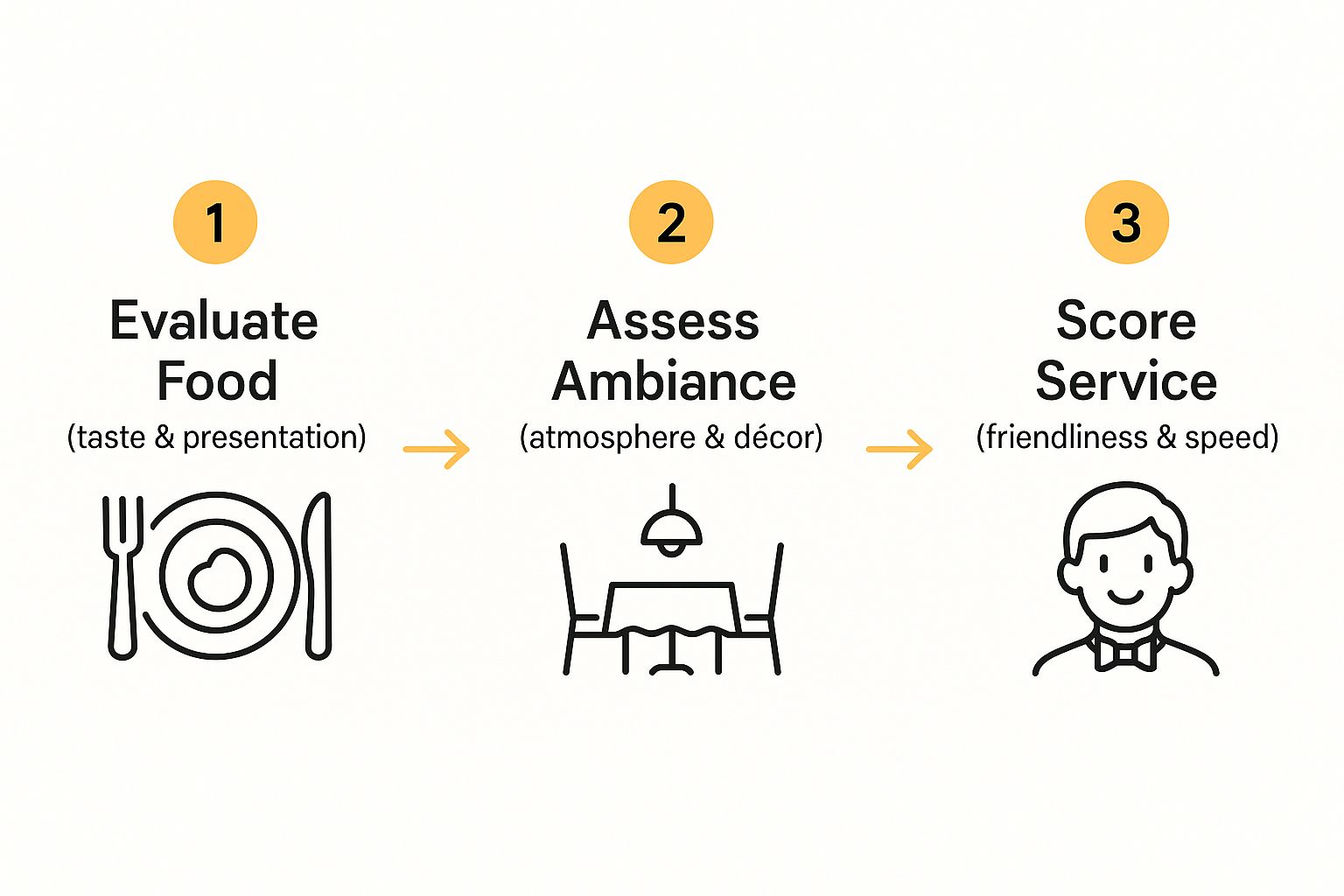
Thinking through each element helps you arrive at a more balanced rating. A 5-star review should be for those truly flawless experiences. Think of a 3-star rating as perfectly average—it was fine, but you probably wouldn't rush back. The key is to be consistent so people who follow your reviews know what to expect.
"Your authentic experience is exactly what other people are looking for. You don't need a professional chef's vocabulary to explain why you loved (or didn't love) a dish. Just be you."
How Long Should a Good Restaurant Review Be?
The sweet spot is somewhere around 200-400 words. If it's too short, it's not helpful. If it's a novel, no one will read it. A few solid paragraphs usually does the trick.
I like to use a simple structure:
A punchy opening line that summarizes the vibe.
A paragraph dedicated to the food—the star of the show.
Another paragraph for the atmosphere and service.
A quick wrap-up with a final recommendation.
This gives readers enough detail to make a decision without getting bogged down. And hey, if you ever run into technical trouble with a review platform, their help section is your best friend. For platform-specific questions, you can always explore the BYTEY help center for tips on our community features.
Ready to turn your dining experiences into fun, rewarding discoveries? With BYTEY, our AI-powered platform learns your tastes to serve up spot-on recommendations. Share your reviews with a community of food lovers, complete challenges, and unlock perks along the way. Join the early access list and start your food adventure today.